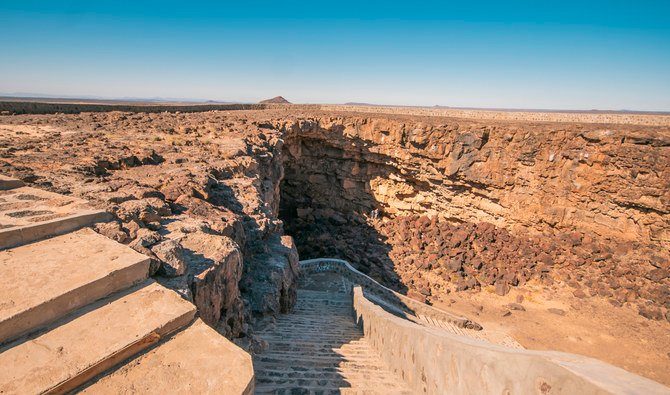
Saudi Arabia · Najran Region
Al Faw
Al Faw, on the north-western edge of the Rub' al Khali, was the capital of the Kindah kingdom from the 4th century BCE to the 4th century CE. Inscribed on the UNESCO World Heritage List in 2024, the site presents conservation conditions that differ fundamentally from any work undertaken in northern Europe.
Heritage Context
About Al Faw
Al Faw sits at the convergence of ancient caravan routes linking south Arabia, Mesopotamia and the Levant. Excavations since the 1970s have revealed a fortified market, residential quarters, palaces, two temples, an extensive necropolis and one of the richest collections of pre-Islamic Arabian sculpture in existence.
The site's mud-brick architecture, sandstone reliefs and rock-cut tombs have survived because of the extreme aridity of the southern desert, but exposure since excavation has accelerated decay through wind erosion, thermal cycling and occasional flash flooding.
Inscription on the World Heritage List in July 2024 places Al Faw under the Operational Guidelines of the World Heritage Convention, requiring conservation interventions that align with international best practice and the Saudi Heritage Commission's management framework.
Conservation Challenges
What we encounter in Najran / Rub' al Khali
Mud-Brick Erosion
Exposed mud-brick walls suffer rapid surface loss from wind-borne sand abrasion and rare but destructive rainfall events.
Thermal Stress on Stone
Daily temperature swings of 25–30°C drive micro-fracturing in sandstone carved reliefs and architectural members.
Soluble Salt Damage
Capillary rise of saline groundwater causes sub-florescent salt crystallisation behind carved surfaces, leading to spalling.
Flash-Flood Vulnerability
Low-lying excavation trenches and rock-cut tombs are exposed to occasional but severe water ingress from desert storm events.
Visitor Access Pressure
Newly opened heritage routes require sensitive interpretation infrastructure that does not damage archaeological deposits.
Our Approach
How we work here
Our work in Saudi Arabia is conducted in partnership with the Saudi Heritage Commission and supports site-management plans developed under the World Heritage nomination dossier.
Mud-brick stabilisation uses traditional regional techniques — sacrificial mud renders, palm-fibre reinforcement and lime-stabilised capping — adapted from contemporary scholarship in earthen architecture conservation.
Stone treatment follows the same ICOMOS-aligned principles applied to our UK work, with materials and methods trialled on test panels before any application to original fabric.
Notable sites & features
- Pre-Islamic souq (market complex)
- Royal palace and residential quarter
- Rock-cut tombs of Jabal Tuwaiq
- Carved sandstone funerary stelae
- Twin temples of the Kindah capital
Frequently asked
Do you work directly with the Saudi Heritage Commission?
Yes. International conservators engaging with World Heritage sites in Saudi Arabia work under the Heritage Commission's management framework and we operate within that structure.
How does desert conservation differ from UK practice?
The principal threats are thermal cycling, salt crystallisation and wind erosion rather than freeze-thaw and biological growth. Treatment chemistry, application timing and materials selection all shift accordingly, but the underlying ICOMOS principles remain the same.